When building a Coleman Collection timepiece, one of the most important decisions you'll make is the movement — the mechanical engine that powers your watch. We offer movements from two respected manufacturers: Miyota (Japan) and Sellita (Switzerland). Both produce excellent automatic calibers, but they differ in philosophy, finishing, and character.
This guide breaks down exactly what separates them, so you can choose the movement that matches your priorities.
The Two Families at a Glance
| Specification | Miyota 9039 | Miyota 82S0 | Sellita SW200-1 | Sellita SW300-1 |
|---|---|---|---|---|
| Origin | Saitama, Japan | Saitama, Japan | La Chaux-de-Fonds, Switzerland | La Chaux-de-Fonds, Switzerland |
| Type | Automatic | Automatic (open-heart) | Automatic | Automatic (slim) |
| Frequency | 28,800 vph (4 Hz) | 21,600 vph (3 Hz) | 28,800 vph (4 Hz) | 28,800 vph (4 Hz) |
| Power Reserve | 42 hours | 40 hours | 38 hours | 42 hours |
| Jewels | 24 | 21 | 26 | 25 |
| Hacking | Yes | No | Yes | Yes |
| Hand-winding | Yes | No | Yes | Yes |
| Diameter | 26mm | 26mm | 25.6mm | 25.6mm |
Accuracy and Regulation
Both the Miyota 9039 and Sellita SW200-1 operate at 28,800 vibrations per hour — the modern standard for automatic movements. At this beat rate, both achieve similar out-of-the-box accuracy of approximately -10 to +30 seconds per day.
The Miyota 82S0 runs at a lower 21,600 vph (3 Hz), which means its seconds hand has a slightly less smooth sweep. The tradeoff is reduced wear on the escapement, which can contribute to longevity between services.
Where the Sellita pulls ahead is in regulation. The SW200-1 features a fine-adjustment regulator (the "etachron" style system) that allows a watchmaker to dial in tighter tolerances — typically -5 to +10 seconds per day. The Miyota 9039 uses a simpler regulation system that's effective but less precise at the margins.
For daily wear, the difference in accuracy between these movements is negligible. Both will keep time well enough that you'll adjust your watch once every week or two at most.
Build Quality and Finishing
This is where the Swiss and Japanese philosophies diverge most visibly.
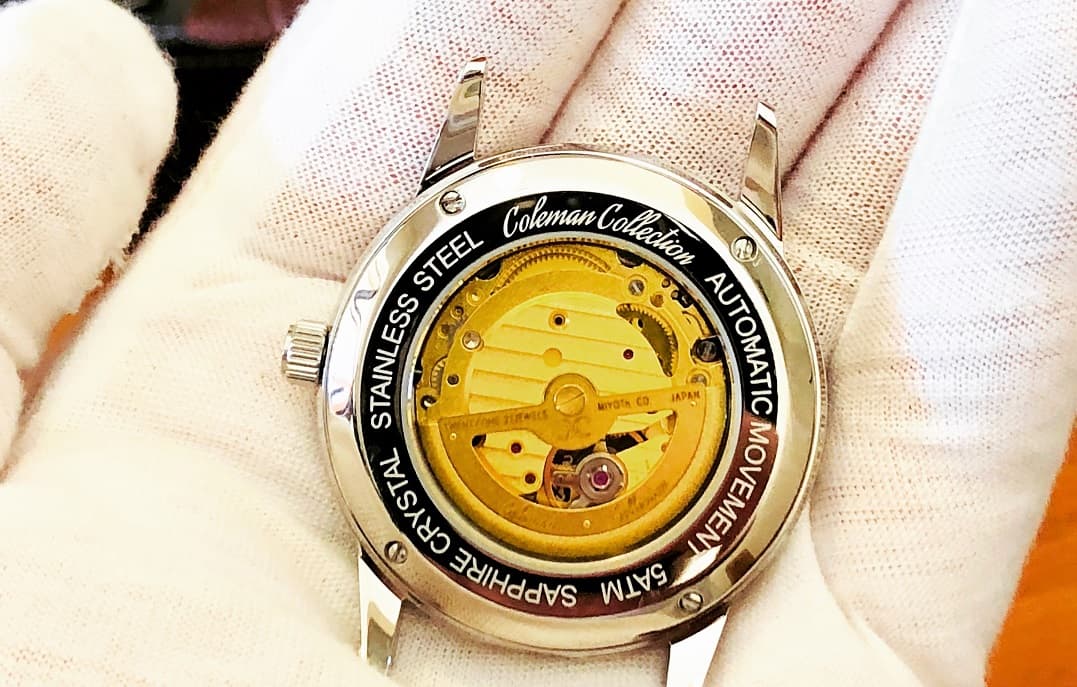
Miyota movements are precision-engineered for reliability and value. The finishing is functional — machine-brushed surfaces, cleanly cut parts, and tight tolerances. Miyota doesn't apply decorative finishing like Geneva stripes or perlage because their design philosophy prioritises performance per dollar. The result is a movement that runs reliably for years without fuss.
Sellita movements carry the Swiss tradition of decorative finishing. The SW200-1 features Côtes de Genève (Geneva stripes) on the rotor and bridges, along with polished screw heads and blued steel components. This finishing is partly aesthetic — visible through an exhibition caseback — and partly functional, as the smoothed surfaces reduce friction and aid in lubrication retention.
Serviceability
Both movement families are designed to be serviced, not replaced. A standard service every 5-7 years involves complete disassembly, ultrasonic cleaning, re-lubrication, and reassembly.
The Sellita SW200-1 has a significant advantage in global serviceability: it's architecturally compatible with the ETA 2824-2, arguably the most widely used automatic movement in watchmaking history. This means virtually every certified watchmaker on earth can service it, and replacement parts are abundantly available.
Miyota movements are also fully serviceable, though parts sourcing can be slightly more limited outside of major markets. In practice, any competent watchmaker can service a Miyota caliber — the movements are well-documented and straightforward to work on.
The Open-Heart Factor
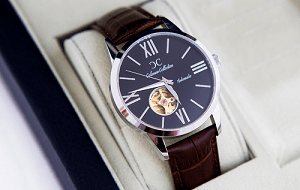
If you're drawn to the Coleman Collection Open-Heart models — where the beating balance wheel is visible through a dial aperture — the Miyota 82S0 is the movement to choose. It's specifically designed with a visible balance wheel at the 9 o'clock position, creating that signature window into the mechanical heart of the watch.
The 82S0's lower beat rate of 21,600 vph actually works in its favour aesthetically: the slower oscillation of the balance wheel is more visible to the naked eye, creating a mesmerising display of mechanical motion.
Price and Value
Miyota movements are manufactured at significantly higher volumes than Sellita, which allows for lower per-unit costs. In the Coleman Collection configurator, choosing a Miyota movement keeps the price at the entry point of the range, while Sellita movements add a premium that reflects their Swiss manufacturing, finer finishing, and broader service network.
Neither is objectively "better" — they represent different value propositions:
- Miyota: Maximum reliability per dollar. Japanese engineering. Longer power reserves. Ideal for those who prioritise the wearing experience over the provenance of the movement.
- Sellita: Swiss-made heritage. Decorative finishing visible through the caseback. Global ETA-compatible servicing. Ideal for those who value the tradition and craftsmanship of Swiss watchmaking.
Which Should You Choose?
Choose Miyota if:
- You want the best value for a reliable automatic watch
- You prefer a longer power reserve (40-42 hours)
- You want the open-heart complication (82S0)
- You appreciate Japanese engineering philosophy
Choose Sellita if:
- Swiss-made provenance matters to you
- You want finer decorative finishing on the movement
- You want the widest possible network for future servicing
- You appreciate the tradition of Swiss horology
Both movements will serve you well for decades. The choice ultimately comes down to what story you want your watch to tell.
Frequently Asked Questions
Both the Miyota 9039 and Sellita SW200-1 operate at 28,800 vibrations per hour and achieve similar out-of-the-box accuracy of approximately -10 to +30 seconds per day. However, the Sellita SW200-1 can be regulated to tighter tolerances of -5 to +10 seconds per day due to its finer regulation mechanism.
Both movements are designed to last decades with proper servicing every 5-7 years. The Sellita SW200-1, being ETA 2824-2 compatible, benefits from a wider global network of parts availability, which may make long-term servicing marginally easier. Miyota movements are also highly durable and fully serviceable.
It depends on your priorities. The Miyota 9039 and 82S0 offer exceptional value with reliable Japanese engineering and longer power reserves (40-42 hours). The Sellita SW200-1 and SW300-1 are Swiss-made movements with finer finishing and global ETA-compatible servicing. Both are excellent choices — the Miyota for value-conscious buyers, the Sellita for those who prefer Swiss craftsmanship.
The movements are not interchangeable — each requires a case designed for its specific dimensions and stem position. However, Coleman Collection offers both Miyota and Sellita options in the watch configurator, so you can choose your preferred movement when building your timepiece.